
The EnWell product range includes common components in (bio)gas installations. This includes gas purification, gas analysis, gas drying, gas buffer systems, low-pressure and high-pressure compression, flare systems, and piping systems and structures.
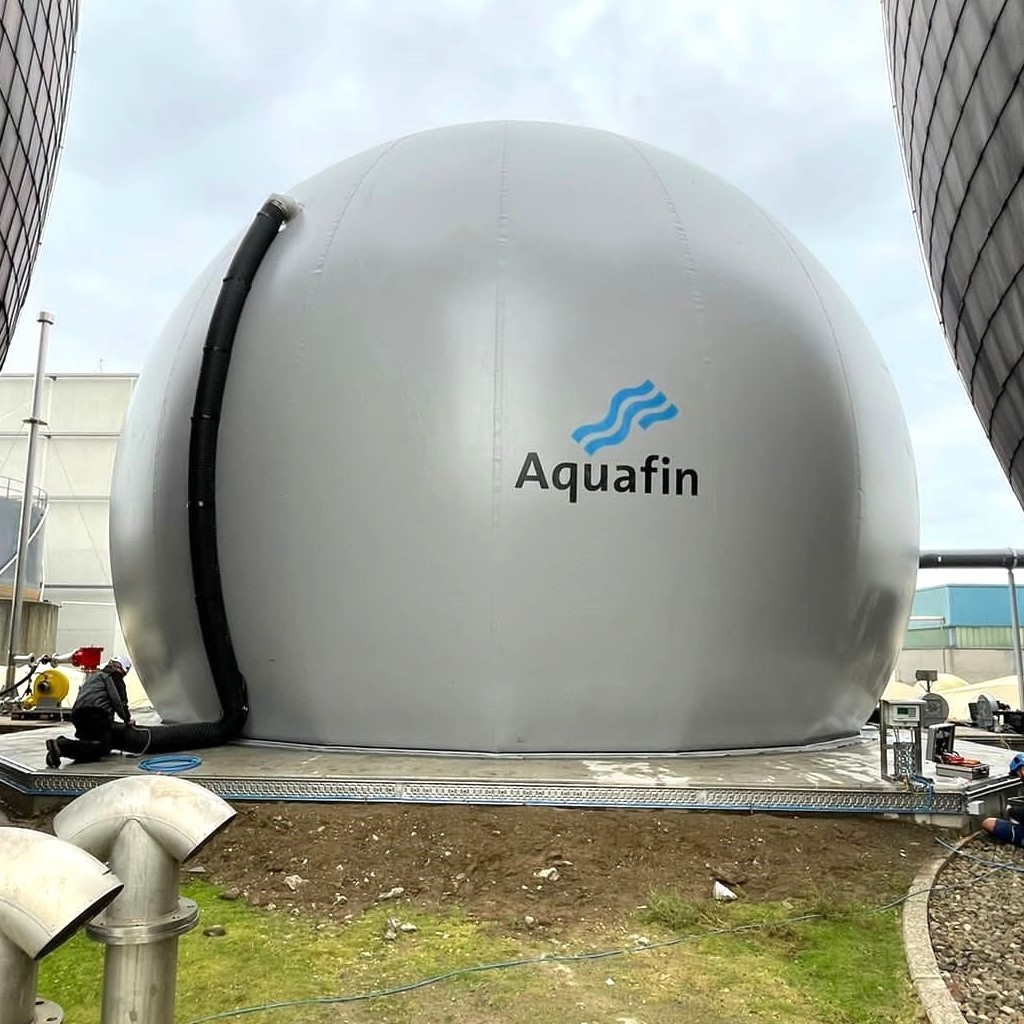
For biogas storage, biogas holders can be supplied executed as double-membrane gas holders or as containerized gas buffers. Double-membrane gas holders are available in gas buffer volumes between 100 and 12,000 m³. Containerized gas buffers are available in ISO container sizes 10′, 20′, and 40′. The gas buffer volumes range between 15 and 75 m³.
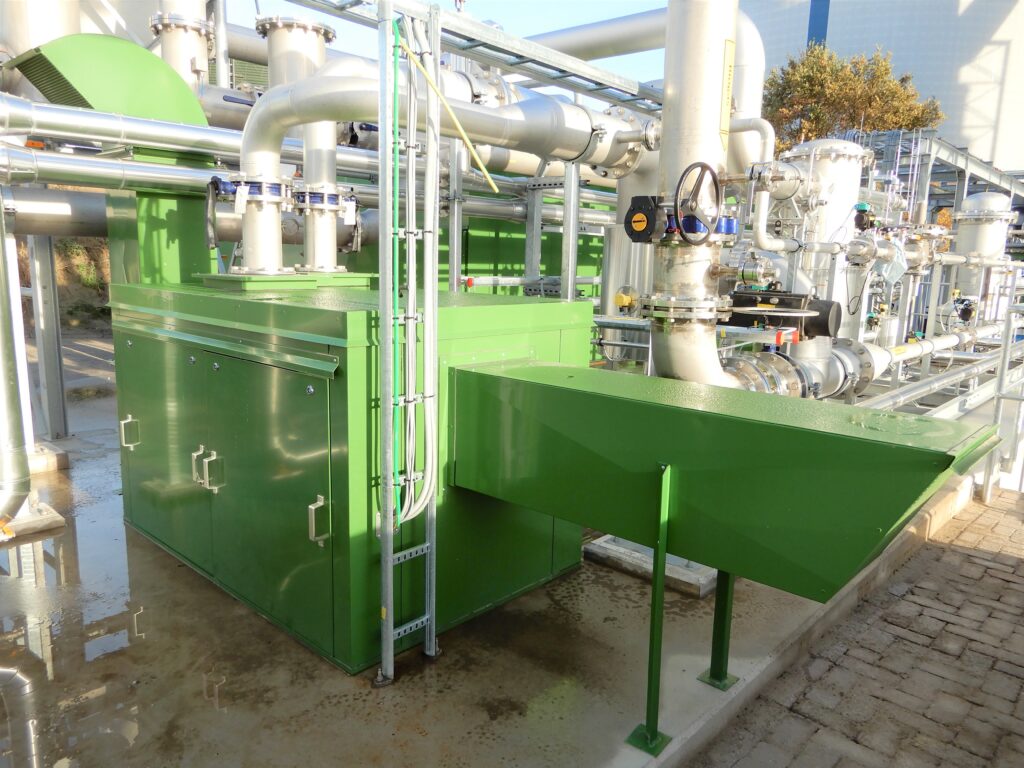
EnWell supplies biogas installations. Depending on the application, a biogas installation usually consists of various components such as a dewatering system, gas holder, gas treatment, pressure boosting, and a flare system. Subsequently, the biogas is suitable for use in a boiler, gas engine, or biomethane installation. Biogas must have the required pressure, and in many cases, it must be dewatered and dried. Additionally, components such as hydrogen sulfide (H2S) and siloxanes must be removed.
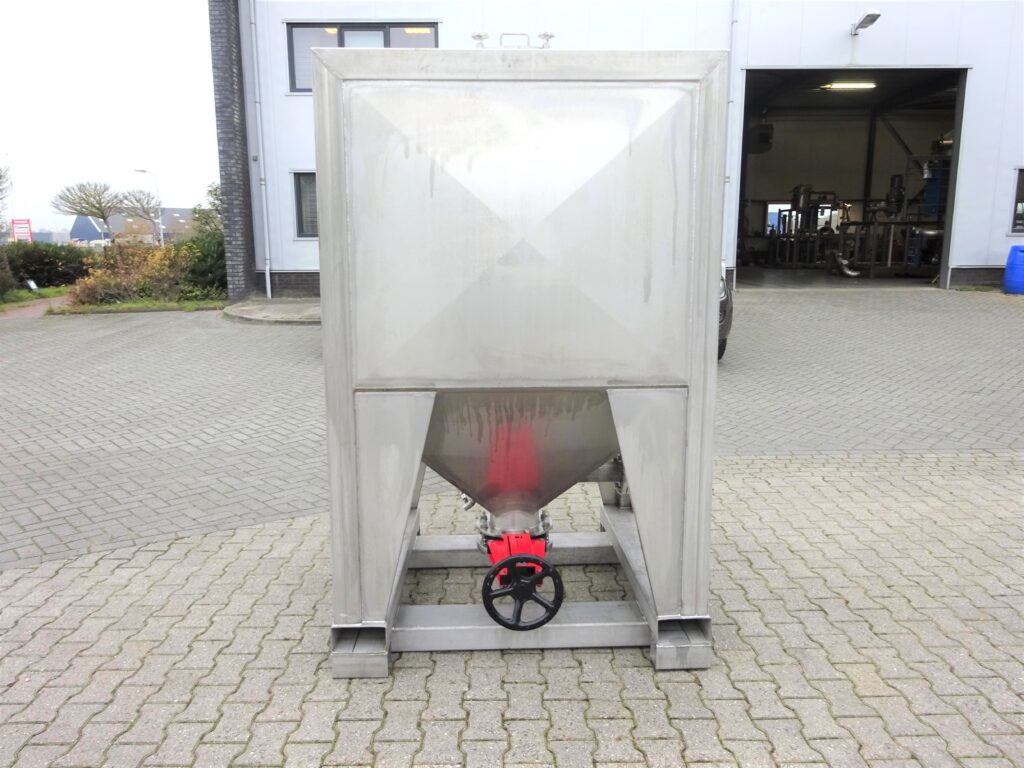
Biogas in many cases contains hydrogen sulfide (H2S), among other substances. H2S has a corrosive effect if this biogas is utilised, for example, as fuel in boilers or gas engines. Various systems for H2S are available, such as biological and chemical scrubbers, which are used at high loads. EnWell uses activated carbon to remove H2S from biogas. Siloxanes can also be removed from biogas using a specific type of activated carbon. Depending on the load and desired service life, a silo-shaped unit or a housing as shown in the image is used.
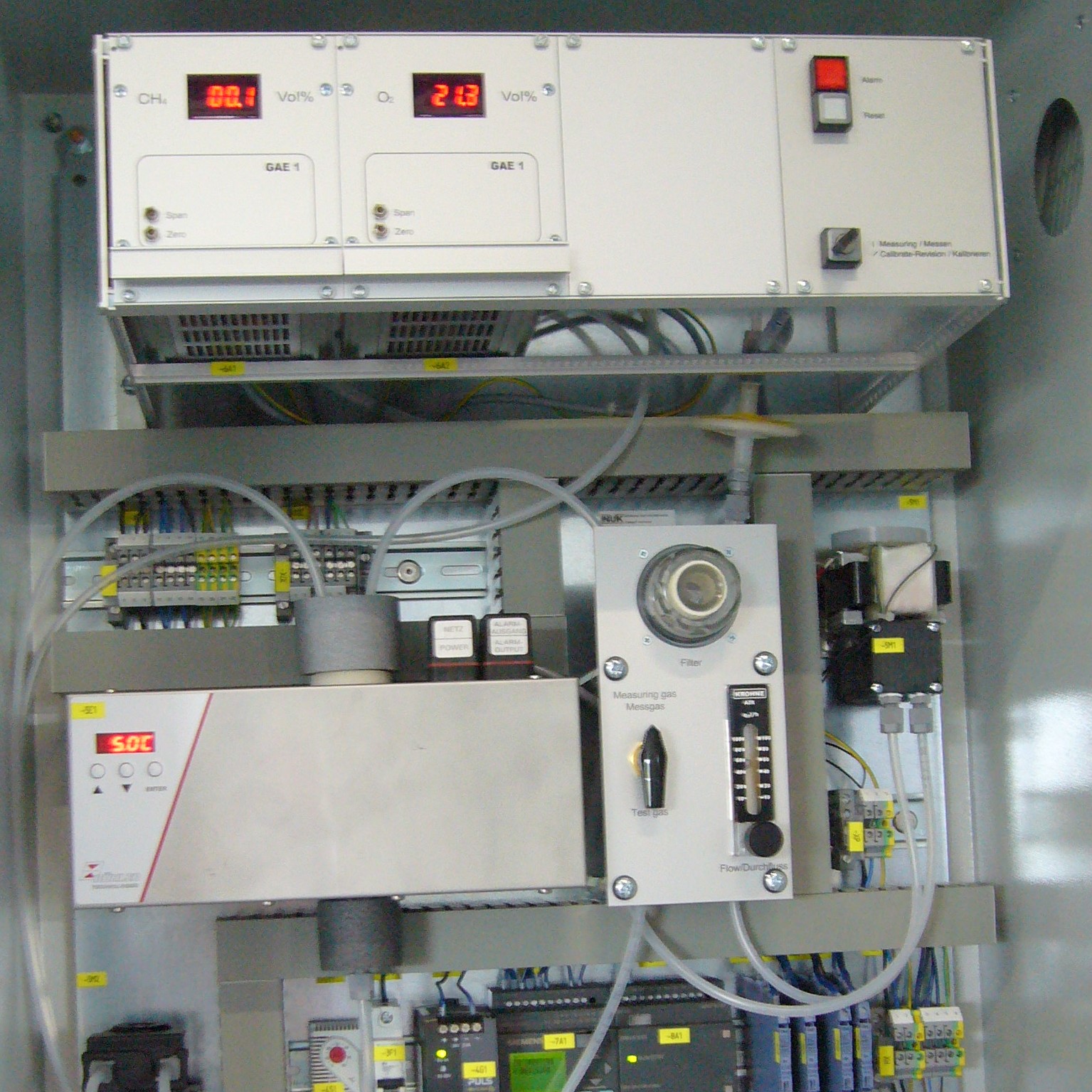
To determine the composition of biogas and to monitor it, the use of a continuous biogas analysis system is necessary. EnWell supplies a complete modular biogas analysis system with one or more analyzers. Biogas can be analyzed for CH4, CO2, O2, and H2S. The biogas is led to the analysers using a sample gas pump. After filtering the biogas is dried prior to analysis. The sample gas flow can be adjusted and is monitored. The analyzers are built in a 19” configuration, which makes it easy to remove the analyzers for service purposes to replace the measuring cell after the end of the measuring cell’s service life (2…4 years). For H2S, the service life of the measuring cell is (1…2 years), with the measurement performed discontinuously to extend the service life of the measuring cell. The analysis systems are easy to calibrate during operation using ambient air and a calibration gas. The parameters and measurement ranges are: O2 (0…25 vol.%) CO2 (0…100 vol.%) CH4 (0…100 vol.%) H2S (0…2,000 ppm)1 1Other measurement ranges are also available.
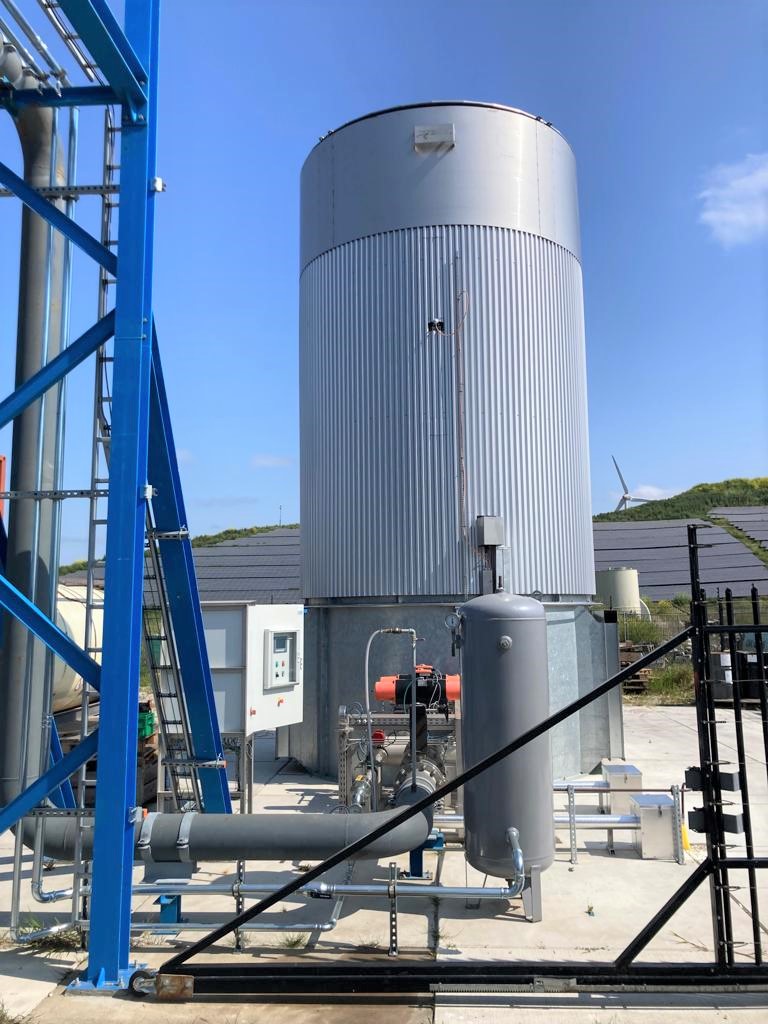
EnWell supplies low-temperature and high-temperature flare systems for the combustion of biogas, natural gas, off-spec biomethane, and various industrial gases (i.e. Hydrogen, DME, Ethylene, Propane, Butane, etc.).
Parameters important for the correct dimensioning of a flare are:
- Medium (composition of the gas to be combusted);
- Capacity range (min./nominal/ max. Nm³/h);
- Gas temperature;
- Available gas pressure;
- Visible or invisible flame;
- Specific gas flows with different calorific values (e.g., combination of biogas / off-spec green gas);
- Availability of support fuel if the gas is non-flammable or difficult to ignite;
- Stationary or mobile version
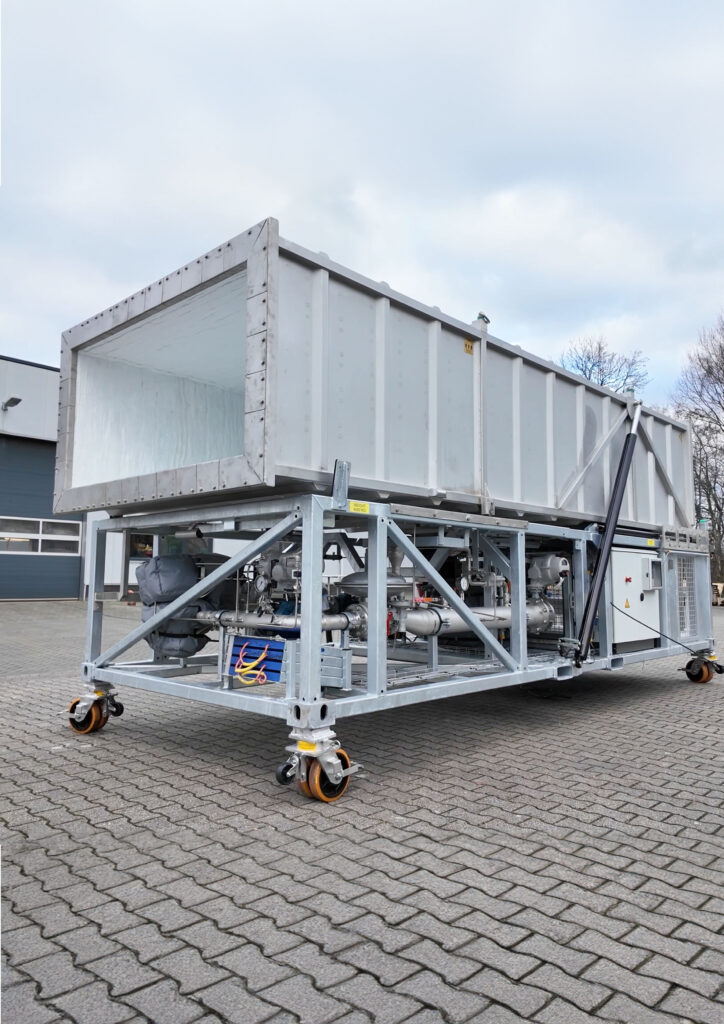
For mobile flare applications used to burn industrial gases at various locations, we supply mobile flare systems. These can be supplied as a trailer-mounted unit or as a skid-mounted unit equipped with twistlocks (see image). These systems can be used to “flare” high-pressure piping systems and process installations (up to 100 barg). The maximum capacity of this type of flare is determined by the type of gas. For natural gas, the maximum capacity is approximately 1,200 Nm³/h.
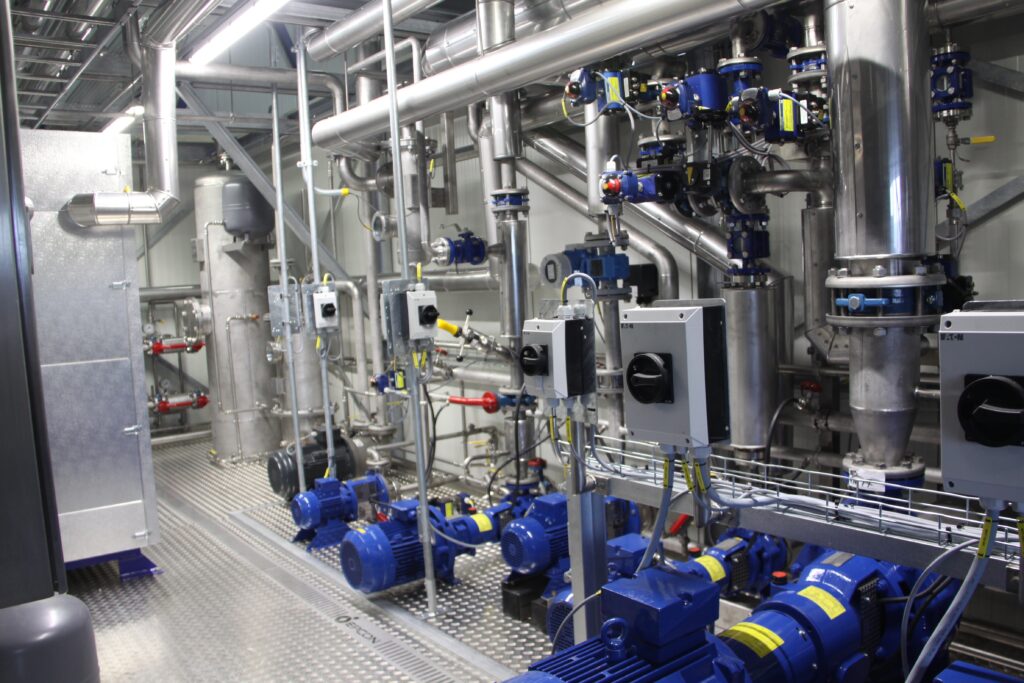
We manufacture and assemble plastic and steel piping systems made of HDPE, stainless steel, and carbon steel for applications in industry and food-related companies. Piping systems, tanks, condensate drain vessels, etc., that fall under the PED (Piping Equipment Directive) can also be supplied, given that we employ certified welders. EnWell supplies and installs piping systems on-site, equipped including the necessary instrumentation and fittings. We produce also required stairs, platform structures, and cage ladders that provide safe access to installation components.
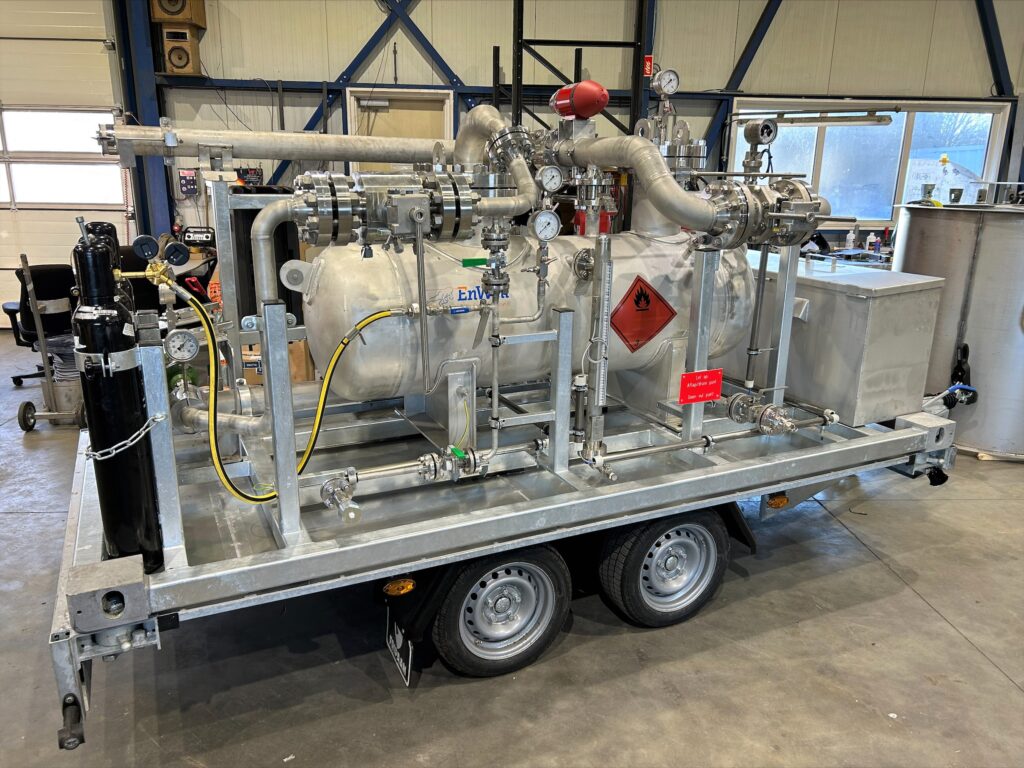
Based on customer specifications, we can build complete installations, including on a skid (foundation frame), in container housings, or for installation in an existing building. The installations can be equipped with electrical cabling, lighting, compressed air distribution, and seal water systems.
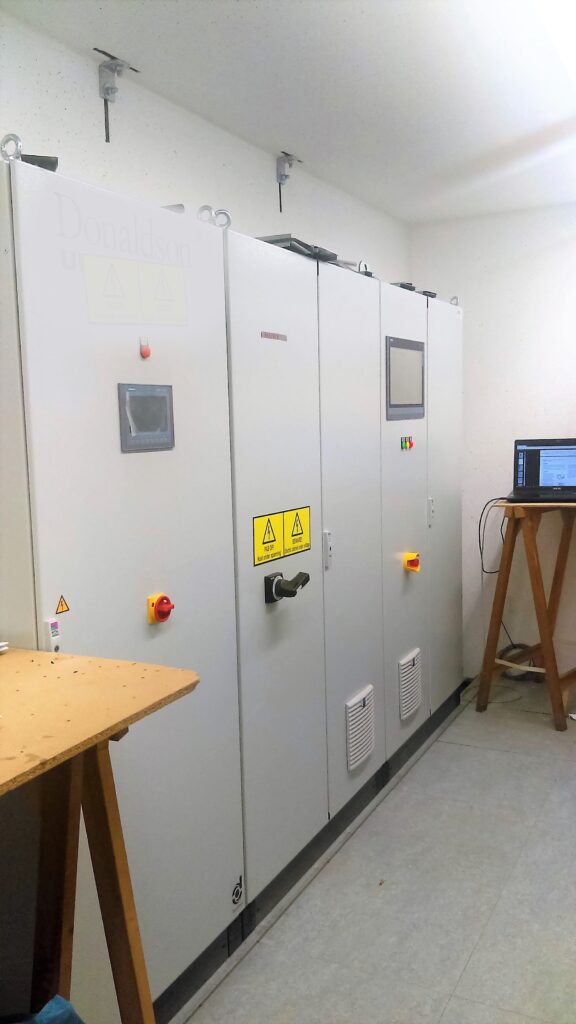
Installations are delivered with a local electrical control system in which all control functions, measurements, and operation can take place. Communication with external control systems can take place via standard communication protocols such as: Profibus; Profinet; Analog signal exchange; Potential-free contacts. If a PLC is used, we can provide operation via HMI Touch panels and visualize the process locally on the HMI panel or on a PC visualization system.